


The wedding veil. It’s a custom dating back to ancient times in almost any culture. In many traditions, the bridal veil has been a potent symbol evoking not only purity, but mystery too. …the rules about veils have flown out the window.
It’s also—strangely —been a hive of innovation. Since Biblical times, it seems that every era’s felt compelled to put its personal stamp on the veil. In the 14th century, for example, brides wore demure hoods made of silk netting. The nostalgic Victorians donned yards and yards of handmade lace they naturally passed on to their heirs. And what about the swinging 60s? They brought us the pouf veil, still stylish today.
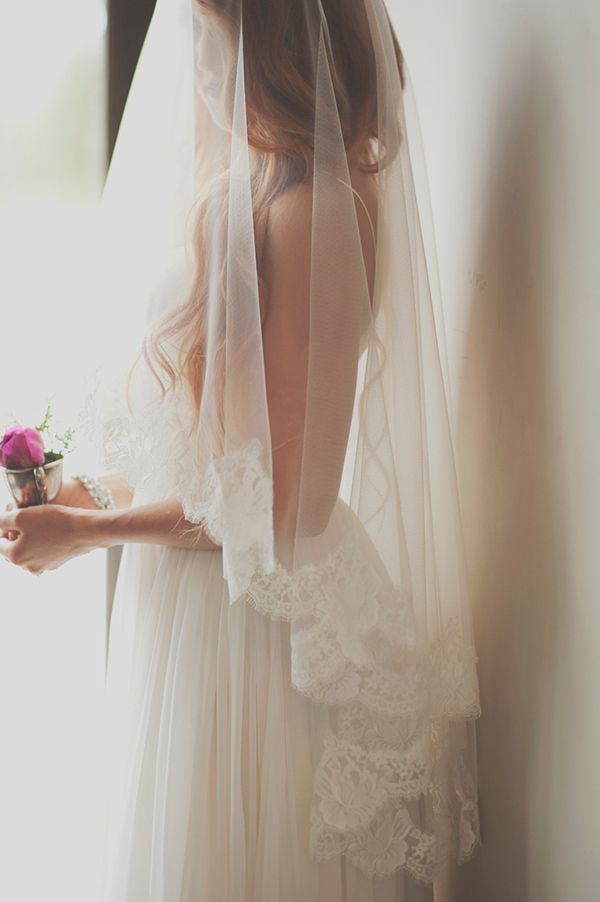 heyweddinglady
These days, any rules about the veil you’re supposed have flown out the window. Whatever guidelines exist are purely a matter of taste, and depend on your sense of proportion and style. So, no matter what dress you don, your veil could be a jazzy net bow perched atop your head … or yards and yards of tulle that trail your hemline.
Learning the Lengths
Bird Cage or Net Pouf. Made of either netting or tulle, this veil falls above the shoulder line. Since it’s shorter, it tends to look structured. In fact, it’s more a hybrid of headpiece and veil. Perfect for fashionistas.
Blusher or Flyaway. Typically, this is the veil you wear over the face during the ceremony. You can also wear it shoulder-length in layers. Though considered informal, this is the veil of choice for some chic, formally-gowned brides.
Elbow. Extends to the elbow or a couple inches below.
 usmagazine
Fingertip. This is the most popular length; it’s flattering to nearly every figure type and goes with most silhouettes.
Waltz. Falls anywhere between knee and ankle.
Chapel. Considered formal. Extends about two feet beyond the hemline.
Cathedral. The most formal veil. Extends three feet or more beyond the hem.
Double Tier. Two layers. Typically the shorter one’s a blusher, but not always.
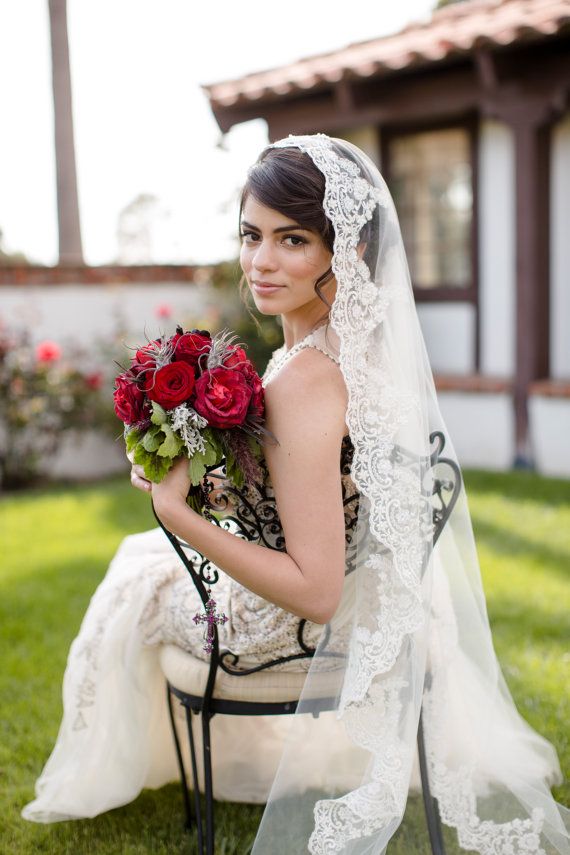 Etsy
EtsySignature Styles
Pouf. Here, a width of tulle or English netting is gathered at the crown. Optionally attached to a headpiece.
Dropped. Yes, actually dropped onto the head in a single layer of tulle or lace; often bordered with lace or ribbon. A Mantilla is a type of dropped veil.
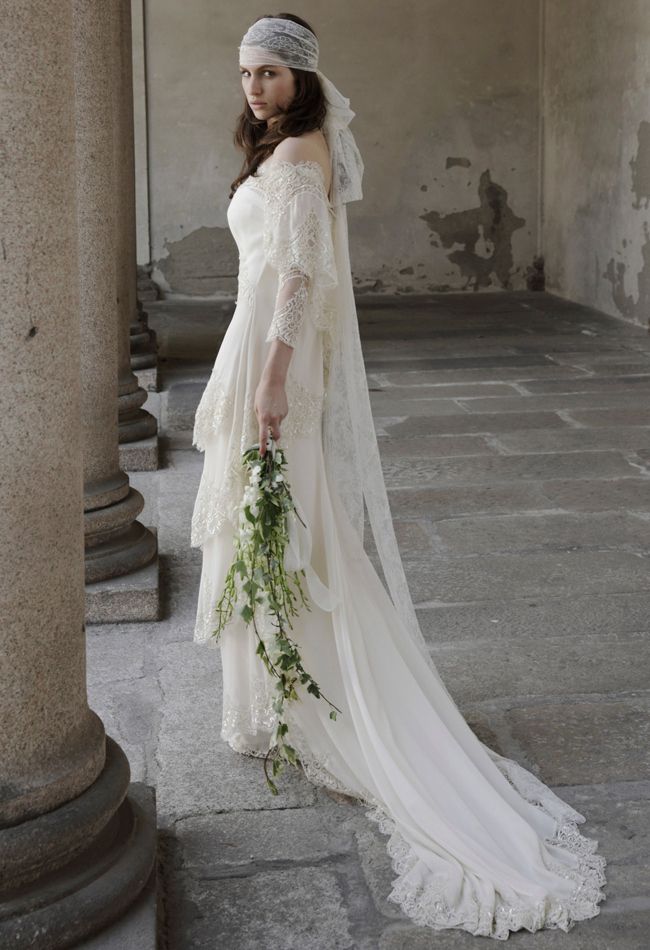
Long Scarf. Considered more a headwear option than a veil, depending on the length of chiffon or silk gauze used. A 5-yard length that wraps around the head and frames the face creates a long train that also makes for an extraordinary veil. Perfect for Mosque weddings.
More: 14 Romantic Wedding Veils | Are You Stumped By Wedding Hairstlyes and Veil Choices?
 theknot.com
Favorite Fabrics
Typically, tulle rules the roost — though chiffon, silk gauze and different types of nettings are also popular. Remember Julie Andrew’s wedding in The Sound of Music? Her veil was silk organza . . . a stunning choice. But equally stunning, and my personal favorite, is silk gauze. It’s not as transparent or springy as tulle, but the difference is delicious: striking opacity, and a floaty quality to die for. This type of veil lifts off the ground whenever you walk or the breeze blows.
Choosing the Veil That Perfects the Look
Most brides wait until they’ve got the gown on hand before they choose the veil. In addition to complementing your dress, you’ll need a veil that flatters your body type. For example, petite brides want to create the impression of height. Pouf veils are one option, as long as the volume up top doesn’t evoke an Indian headdress, dwarfing the bride rather than raising her profile.
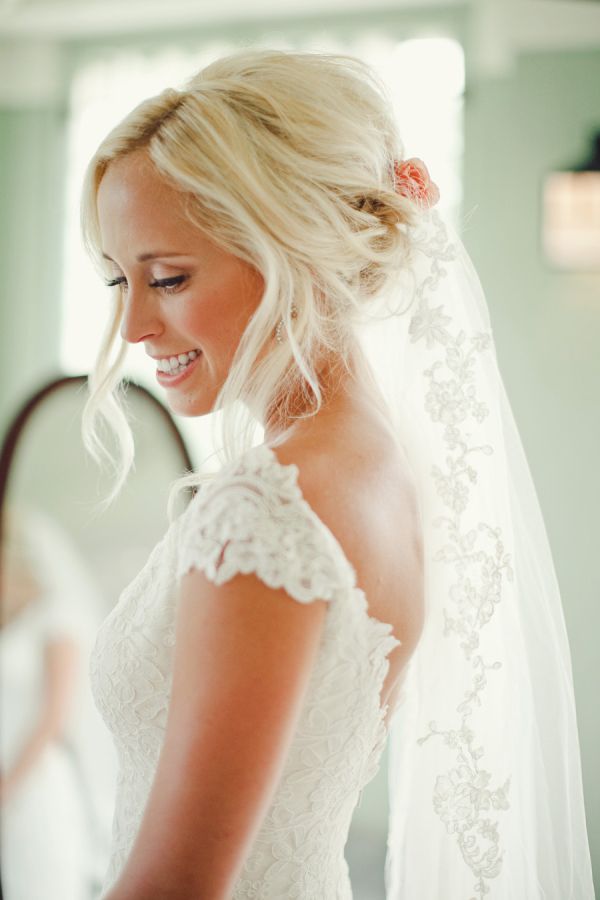 elizabethannedesigns
But if you’re on the short side, a cathedral-length veil isn’t your best choice—not even a dropped version, with zero density. You can get the drama and extension you need by scaling down a waltz or chapel-length to size.
On the other hand, heavier and/or thick-waisted brides look best in a one-layer dropped veil tacked onto a bun that falls in a swirl down the back. Try keeping your lines delicate and back-oriented, avoiding elbow-length veils with lots of volume. Ditto for veils edged in ribbon; they can form lines across the waist, adding girth.
If you’re tall, you’ll want to keep your admirable poise intact without going over the edge. Go ahead and wear that cathedral veil with your long-trained ballgown. But realize that even tall, sylph-like women have limitations: Princess Diana, a stunning 5’10”, over-volumized her look when she piled a veil of multi-layered tulle atop a dress already sinking under the weight of über-pouf. Let’s face it — we all have to work on getting the symmetry right.
 Pinterest
The Rule of Contrast … and Advanced Veiling 401
Generally, you’ll want to pair ornamental gowns with simple veils, like a single layer of tulle with narrow edging or none at all. In contrast, pure lace veils or ones edged with wide borders call for a simple, clean gown.
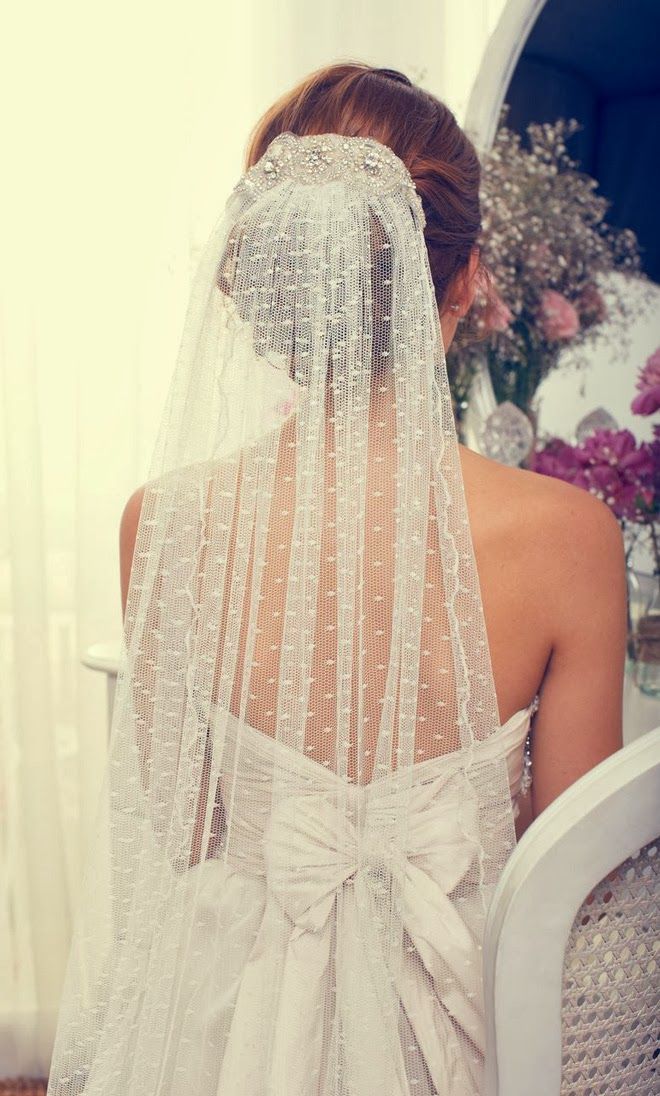
But what about the dress with exquisite back details you want to show off? If this is the case, opt for a shorter veil: a fly-away or net pouf. Want a more romantic look? Try one layer of tulle— preferably in a dropped style that doesn’t fall in creases and folds across your back. Tulle’s simply the best for this; it’s transparent enough to let fine details show through.
What if your gown has no train? Donning a chapel or cathedral length veil can create one—an especially elegant look when your veil sports a wide or lacy border, or a concentration of lacework on the train.
But When Do You and Your Veil Part?
If you’ve picked a long veil and want to ditch part of it for the reception, have your salon work out the fastening system with you and your main helper (maid of honor, for example).
Thinking of dispensing with the whole veil after the ceremony? When, exactly, is up to you: some brides toss it aside when the reception kicks off; others want some veiled photos of the cake cutting, toasts, first dance and so on. And some brides wear their veils all day long. After all, there’s nothing quite like the veil (even more so than the dress!) to really drive it home: today, I’m the bride.
More: 14 Romantic Wedding Veils (We Found On Pinterest) | Stumped By Hairstlyes and Veil Choices?